
 English
 German
  Italian
  Hi, User
 Deriv Charts: Your Complete Guide to Trading Platforms
Ever stared at a trading chart and felt completely overwhelmed by the cluttered interface, wondering which buttons actually matter for your next trade? You’re not alone. Most forex traders waste weeks, sometimes months, trying to figure out complex charting tools when they should be focusing on reading price action and making profitable decisions.
Here’s the good news: Deriv charts are designed to simplify your trading experience, not complicate it. Whether you’re analyzing currency pairs, synthetic indices, or commodities, understanding how to navigate Deriv’s charting platforms will dramatically shorten your learning curve and help you focus on what truly matters: price action.
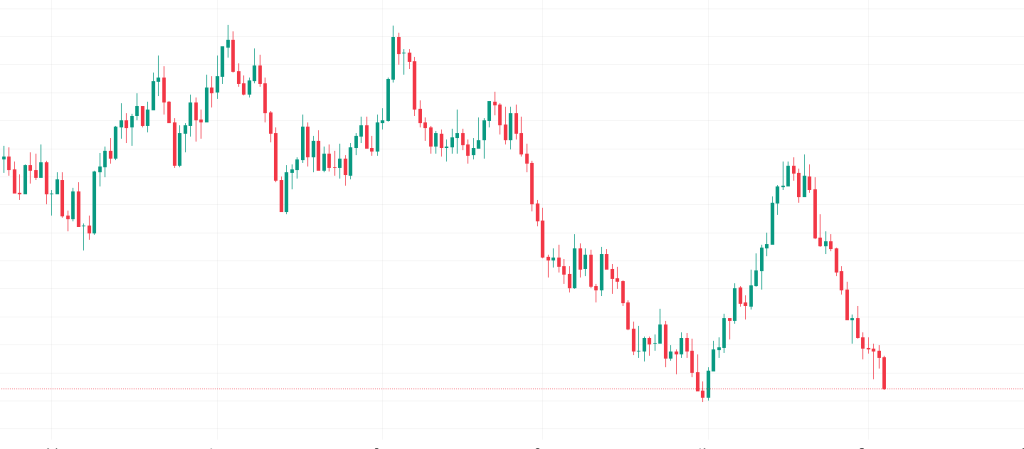
In this guide, you’ll discover everything you need to know about Deriv charts across their main trading platforms. We’ll break down the complex terminology into simple, actionable steps that will have you analyzing charts confidently within minutes, not months.
What Are Deriv Charts?
Deriv charts are visual representations of price movements displayed across various trading platforms offered by Deriv. Think of them as your window into the market; they show you where price has been, where it currently is, and help you make educated predictions about where it might go next.
The beauty of Deriv charts lies in their versatility. Unlike many brokers that lock you into one platform with limited customization, Deriv provides multiple charting solutions tailored to different trading styles and experience levels. Whether you prefer the professional-grade analysis tools of MT5, the copy trading features of cTrader, or the simplified interface of Deriv Trader, you’ll find a charting solution that matches your needs.
What makes Deriv charts particularly valuable for price action traders is their clean presentation of market data. You can strip away indicator clutter and focus purely on candlestick patterns, support and resistance levels, and market structure, the foundational elements that drive profitable trading decisions.

Deriv MT5: The Professional’s Choice for Chart Analysis
Deriv MT5 (MetaTrader 5) represents the gold standard in professional charting. If you’re serious about technical analysis and price action trading, this is where you’ll spend most of your time.
Understanding MT5 Chart Types
MT5 offers three primary chart types, each serving a specific analytical purpose:
Line Charts connect closing prices over time with a continuous line. They’re perfect when you want to quickly identify the overall trend without getting distracted by short-term price fluctuations.
Bar Charts display four critical price points for each time period: the opening price, highest price, lowest price, and closing price (OHLC). Each bar gives you a complete picture of that period’s price action.

Candlestick Charts are the preferred choice for price action traders. They display the same OHLC information as bar charts but in a more visually intuitive format. The rectangular “body” shows the opening and closing prices, while the “wicks” extend to the high and low. Green or white candles indicate price closed higher than it opened, while red or black candles show price closed lower.
For price action trading, candlestick charts are your best friend. They make it easier to spot key patterns like engulfing candles, indecision candles, and pin bars, all crucial signals in your trading arsenal.
Mastering MT5 Timeframes
Deriv MT5 provides 21 different timeframes ranging from one minute (M1) to one month (MN). Your choice of timeframe should align with your trading style:
Scalpers and day traders typically use M1 to M15 timeframes to capture quick price movements within a single trading session. These shorter timeframes reveal micro-level price action but generate more noise and false signals.
Swing traders prefer M30, H1, or H4 timeframes to identify medium-term trends and price patterns. These timeframes strike a balance between detail and clarity, making them ideal for most price action strategies.
Position traders rely on D1 (daily) and W1 (weekly) charts to analyze long-term market structure and major support/resistance zones. Higher timeframes produce more reliable signals but require more patience.

Here’s a practical tip: Always analyze charts from higher to lower timeframes. Start with the daily chart to understand the overall market structure, then zoom into H4 or H1 to identify specific entry opportunities. This top-down approach prevents you from taking trades that conflict with the broader trend.
Customizing Your MT5 Charts
MT5’s customization options let you create a personalized trading environment that minimizes distractions and highlights what matters most.
Right-click on any chart and select “Properties” (or press F8) to access customization settings. In the “Common” tab, you can choose your preferred chart type, enable chart shift for better visibility of current price action, and adjust scaling options.
The “Colors” tab deserves special attention. Many traders find the default color scheme visually tiring after hours of screen time. Consider setting your background to a dark gray or black, with contrasting colors for bullish and bearish candles. This reduces eye strain and makes price action patterns easier to identify.
Essential MT5 Chart Tools for Price Action Trading
The MT5 toolbar contains dozens of drawing tools, but you only need a handful for effective price action analysis:
Horizontal Line Tool: Mark key support and resistance levels where price has historically reversed or consolidated. These zones often act as magnets for future price action.
Trendline Tool: Connect swing highs (for downtrends) or swing lows (for uptrends) to visualize the prevailing market direction. Valid trendlines should touch price at least twice without penetrating the candles.
Rectangle Tool: Highlight consolidation zones or supply and demand areas where significant price decisions occurred. These rectangles help you identify potential breakout or reversal opportunities.
Fibonacci Retracement Tool: While not purely price action, Fibonacci levels often align with key support and resistance zones. The 50%, 61.8%, and 78.6% retracement levels frequently coincide with areas where price action patterns form.
Remember: less is more. Cluttering your chart with dozens of lines and indicators defeats the purpose of clean price action analysis. Mark only the most significant levels that repeatedly influence price behavior.
Accessing MT5 Charts Across Devices
Deriv MT5 charts are accessible through three platforms:
Desktop Terminal provides the most comprehensive charting experience. You can open multiple chart windows simultaneously, monitor different markets or timeframes at once, and access the complete suite of technical indicators and drawing tools.
Web Platform offers convenient browser-based access without downloads. While slightly more limited than the desktop version, the web platform includes all essential charting tools and automatically updates through Deriv’s servers.
Mobile App puts essential charting capabilities in your pocket. The mobile interface simplifies the MT5 experience with real-time charts, basic drawing tools, and the ability to place trades directly from the chart.
Most professional traders use the desktop version for detailed analysis and trade planning, while relying on mobile for monitoring and quick adjustments throughout the trading day.
Deriv cTrader: Advanced Charting with Modern Features
Deriv cTrader represents the new generation of trading platforms, combining powerful charting capabilities with an exceptionally clean, modern interface. If MT5 feels dated or cluttered, cTrader might become your preferred charting solution.
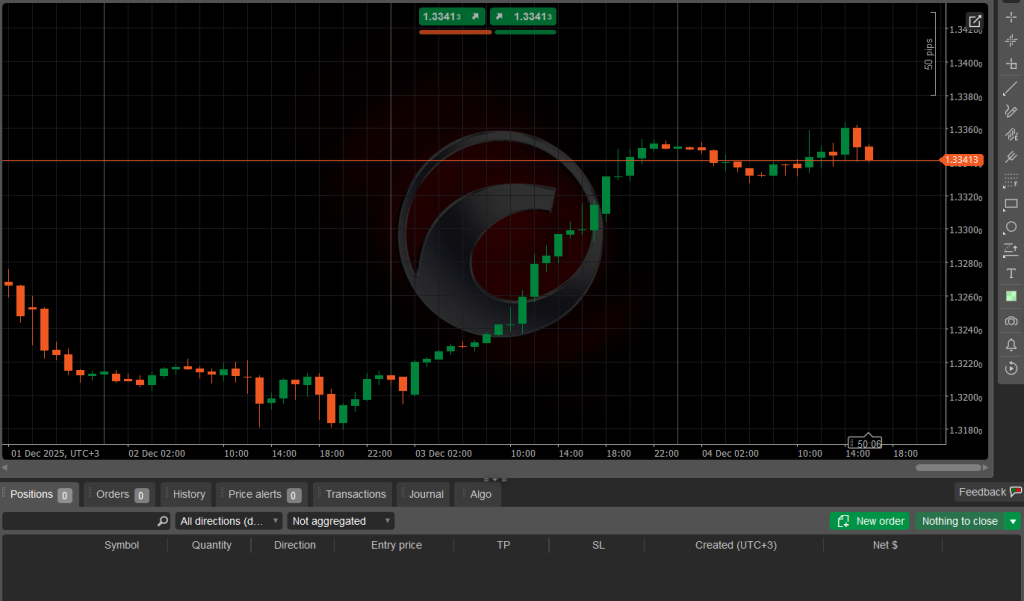
cTrader Chart Advantages
What sets cTrader charts apart? Several features make this platform particularly attractive for contemporary traders:
Cleaner Visual Design: cTrader’s interface follows modern design principles with better spacing, clearer labels, and more intuitive menus. Everything feels less cramped compared to MT5’s busier layout.
54 Timeframes: While MT5 offers 21 timeframes, cTrader provides 54 options, giving you unprecedented flexibility in analyzing price action at exactly the granularity you need.
Advanced Charting Tools: The platform offers four main chart types (candlestick, bar, line, and dot) with extensive drawing tools including channels, Fibonacci tools, Gann tools, and Elliott Wave analysis instruments.
Quick Trade Execution: cTrader’s chart interface allows one-click trading directly from the chart. You can place trades, modify stop losses, and adjust take profits by dragging levels on the chart itself no need to open separate order windows.
Chart Trading in cTrader
One of cTrader’s standout features is true chart trading. Unlike MT5, where you typically place trades through separate windows, cTrader lets you execute everything directly on the chart.
Click anywhere on the chart to instantly open a quick trade panel showing your potential entry price, stop loss distance, and position size. Adjust these values by dragging directly on the chart, then execute with a single click.
This visual approach to trading makes it much easier to visualize your risk-reward ratio and ensure your stop loss sits beyond key support or resistance levels. You can literally see your trade setup before placing it, reducing errors and improving decision-making.
Multiple Chart Layout Options
cTrader excels at workspace organization. You can open multiple charts simultaneously and arrange them in various layouts- a single chart for focused analysis, two charts side-by-side for comparing different assets, four-chart grid for monitoring multiple positions, or custom layouts saved as templates.
This flexibility is invaluable when trading multiple currency pairs or comparing related instruments like EUR/USD and GBP/USD to identify correlated movements.
Copy Trading Charts
cTrader’s unique copy trading feature extends to chart analysis. You can view the exact charts that successful strategy providers are analyzing, seeing their entry points, stop losses, and take profits in real time.
This educational aspect proves invaluable for developing traders. By observing how experienced price action traders mark their charts and structure their trades, you accelerate your learning curve dramatically.
Common Mistakes When Using Deriv Charts
Even with user-friendly platforms, traders frequently make chart-related errors that undermine their results. Avoid these common pitfalls:
Mistake #1: Chart Clutter Overload
Adding too many indicators, lines, and drawing tools transforms your chart into an unreadable mess. Every additional element should serve a specific purpose in your analysis. If you can’t explain why a particular indicator or line matters, remove it.
Mistake #2: Analyzing Only One Timeframe
Trading decisions based on a single timeframe often lead to poorly placed entries. Always perform multi-timeframe analysis: understand the daily trend, identify potential reversal zones on the 4-hour chart, then fine-tune your entry on the 1-hour or 15-minute chart.
Mistake #3: Ignoring Chart Customization
Using default chart settings might seem easier, but proper customization significantly improves your analysis quality. Spend 15 minutes adjusting colors, backgrounds, and displayed information to create a personalized workspace that reduces eye strain and highlights what matters most.
Mistake #4: Over-Relying on Historical Patterns
Just because a chart pattern worked beautifully in the past doesn’t guarantee future success. Price action analysis requires context; consider the overall market structure, recent news events, and volatility conditions before taking trades based purely on chart patterns.
Practical Steps to Master Deriv Charts
Now that you understand the different Deriv charting platforms, here’s your action plan for developing genuine chart mastery:
Step 1: Choose Your Primary Platform
Start with one platform and become proficient before exploring others. If you’re focused on pure price action and technical analysis, begin with Deriv MT5. If you prefer modern interfaces and copy trading, start with cTrader.
Step 2: Customize Your Workspace
Spend your first session customizing your charts, adjusting colors for comfortable viewing, remove unnecessary display elements, set default timeframes, and create chart templates to maintain consistency.
Step 3: Practice Marking Key Levels
Open demo accounts and spend time identifying and marking support and resistance levels on various currency pairs. Focus on finding levels where price has reacted multiple times—these are your high-probability zones.
Step 4: Study Real Price Action
Scroll back through historical charts and identify price action patterns as they developed in real time. Notice how engulfing candles, pin bars, and inside bars formed at key support or resistance levels. This backward-looking analysis builds your pattern recognition skills without the emotional pressure of live trading.
Step 5: Start Small with Live Analysis
Once comfortable with chart navigation and level marking, begin analyzing live markets. Watch how price behaves around your identified levels. Take screenshots when interesting patterns develop, even if you don’t trade them.
Connecting Charts to Price Action Concepts
Understanding chart navigation means nothing without connecting it to actionable price action concepts. Here’s how Deriv charts help you identify the core elements of profitable trading:
Supply and Demand Zones: Use rectangle tools to mark areas where strong buying or selling pressure emerged. These zones appear as consolidation areas before explosive moves.
Support and Resistance Levels: Horizontal line tools on any Deriv platform help you mark price levels where reversals repeatedly occur. The more times price respects a level, the more significant it becomes.
Market Structure: Chart timeframes reveal whether markets are trending (making higher highs and higher lows) or ranging (bouncing between defined levels). This context determines which trading strategies work best.
Indecision Candles: Candlestick charts clearly display dojis, spinning tops, and other indecision patterns that signal potential reversals. These candles often appear before significant market turns.
Engulfing Patterns: Green candles completely engulfing previous red candles (or vice versa) signal momentum shifts. Deriv’s candlestick charts make these powerful patterns immediately visible.
Imbalances: Chart gaps and rapid price moves reveal imbalances between buyers and sellers. These areas often get “filled” as price returns to test the imbalance zone, creating trading opportunities.
Every Deriv charting platform provides the tools to identify these concepts. The platform doesn’t matter as much as your ability to read price action itself.
Your Next Steps
Mastering Deriv charts isn’t about memorizing every button or indicator; it’s about developing the ability to read price action clearly and make confident trading decisions. The platform serves as your tool, but your understanding of market behavior determines your success.
Start by opening a demo account on your chosen Deriv platform. Spend the next week simply observing charts without placing trades. Mark key support and resistance levels. Notice how price respects or violates them. Build your pattern recognition through observation.
Once comfortable with basic chart navigation, deepen your understanding of supply and demand zones, market structure, and key candlestick patterns. These concepts will transform your charts from confusing squiggly lines into clear roadmaps for profitable trades.
Remember: every professional trader started exactly where you are now, staring at charts, wondering what to look for. The difference between them and struggling traders isn’t talent or secret indicators. It’s focused practice using the right tools and concepts.
Deriv charts give you those tools. Now it’s time to put them to work.
Post a Reply
You must be logged in to post a comment.